
…and why most of them fail in practice.
Competency models are one of the most widely used—and misunderstood—tools in modern people management. In theory, they define what great performance looks like. In practice, many become bloated frameworks no one uses.
This article breaks down what competency models actually are, why they often fail, and how to design models that meaningfully improve employee performance, enable better skills assessment, and support enterprise-scale organizational development, without becoming shelfware.
Short Version: A competency model defines the behaviors, skills, and knowledge that predict success in a specific role. Most models fail not because the concept is weak, but because they are built from opinion, overengineered, written as traits instead of behaviors, and never wired into hiring, coaching, or promotion decisions. A model earns its keep only when it changes how talent decisions get made.
Let’s start with the truth: most competency models are useless
The issue isn’t the idea behind competency models. It’s how often they’re built in ways that never hold up in practice.
If you work in HR, talent, or operations, you’ve probably seen some version of this:
- A competency framework with more than 30 ‘capabilities’
- Definitions that sound impressive—but mean little operationally
- A model that looks great, but never made its way into actual hiring or performance decisions
Now, formally, a competency model is a structured framework that defines the skills, knowledge, and behaviors needed for success in a role.
But here’s where most organizations go wrong:
Many organizations treat competency models as HR documentation instead of insisting they function as a practical, operational tool. Competency models should ground the decisions that shape hiring, development, and performance every day. That gap matters, because the model itself is only useful when it changes how talent decisions get made.
What competency models should do
At their best, competency models are the connective tissue across talent systems.
Competency models:
- Define precisely what success actually looks like in a role
- Align hiring, performance, and development
- Provide structure for consistent, defensible skills assessment
- Translate business strategy into talent decisions
- Build shared understanding, unity, and momentum toward the outcomes driven by the established competencies
Done well, they also grow inclusivity and performance at the same time, because everyone is measured against the same observable standard.
Competency models improve hiring, development, and performance outcomes when they are implemented well.
But here’s the point that derails us:
The model itself doesn’t create value. The use of the model does.
And that’s where things fall apart.
Why most competency models fail (and keep failing)
Let’s name the patterns we see across mid-size and enterprise organizations, especially in service- and culture-driven, geographically distributed companies.
1. Competencies built around opinions, not evidence
Too often competency models are shaped by a small group of stakeholder opinions instead of being built on a clear understanding of performance data and what strong, average, and poor performers actually do.
The result?
- Over-indexing on what leaders like
- Under-indexing on what top performers actually do
- Missing key derailers or success drivers
- No clear link to business outcomes
With our approach, competency modeling begins with the end in mind: your intended customer experience and key business goals, built on input and data from your business rather than a one-time conversation.
Because if it’s not predictive, it’s not useful.

2. Overengineered to the point of irrelevance
There’s a strong instinct in HR to make competency models comprehensive. That sounds responsible until the model becomes too complex to use or so broad that it loses what is specific to a role, a level, or a job family. And when a model stops feeling usable, it usually gets ignored.
Despite all the chatter around competencies, many organizations struggle to translate them into action. In fact, a sizeable study found 70 percent of leaders don’t use their own competencies. Research and practitioner experience suggest the same root causes appear repeatedly: models become too complex, feel disconnected from daily work, or never make the leap from an HR document to an operational tool used in hiring, coaching, and development.
Effective (and practical) models:
- Are usable in real time
- Fit naturally into productive hiring and coaching conversations
- Don’t require training just to interpret
If a new leader can’t understand the competency model in the five minutes they have before a coaching conversation or an interview…it’s already failed.
3. Built around traits instead of behaviors
“Strategic thinker.”
“Strong communicator.”
“Collaborative.”
These aren’t competencies. They’re aspirations.
Without observable, behavior-based definitions:
- Managers interpret competencies inconsistently. What does applying strategy successfully look like? Is my definition of strong the same as yours? Unlikely.
- Performance reviews become subjective
- Employee performance conversations lose credibility
Successful models define what success looks like in action, with behaviors that can be observed, measured, and developed.
To this end, we publish worked examples of role-specific competencies for:
4. Disconnected from day-to-day leadership and decision-making
This is the failure that kills most competency models.
If a model isn’t used to:
- Select candidates
- Evaluate performance
- Identify high potentials
…it’s merely documentation, not useful infrastructure.
In contrast, high-impact organizations do not let competencies sit alone in a fancy PDF. They wire them into recruiting, hiring assessment tools, structured interviews, and performance systems so the talent loop actually closes. That work starts with a clear understanding of competencies grounded in the culture the organization is trying to protect.
Take a look at how we decreased turnover for a senior living facility by over 20 percent. This started with a clear understanding of competencies grounded in their culture of care.
Competency models vs. competency frameworks (and why this confusion gets in the way)
Another common issue: treating competency frameworks and models as interchangeable.
They’re not.
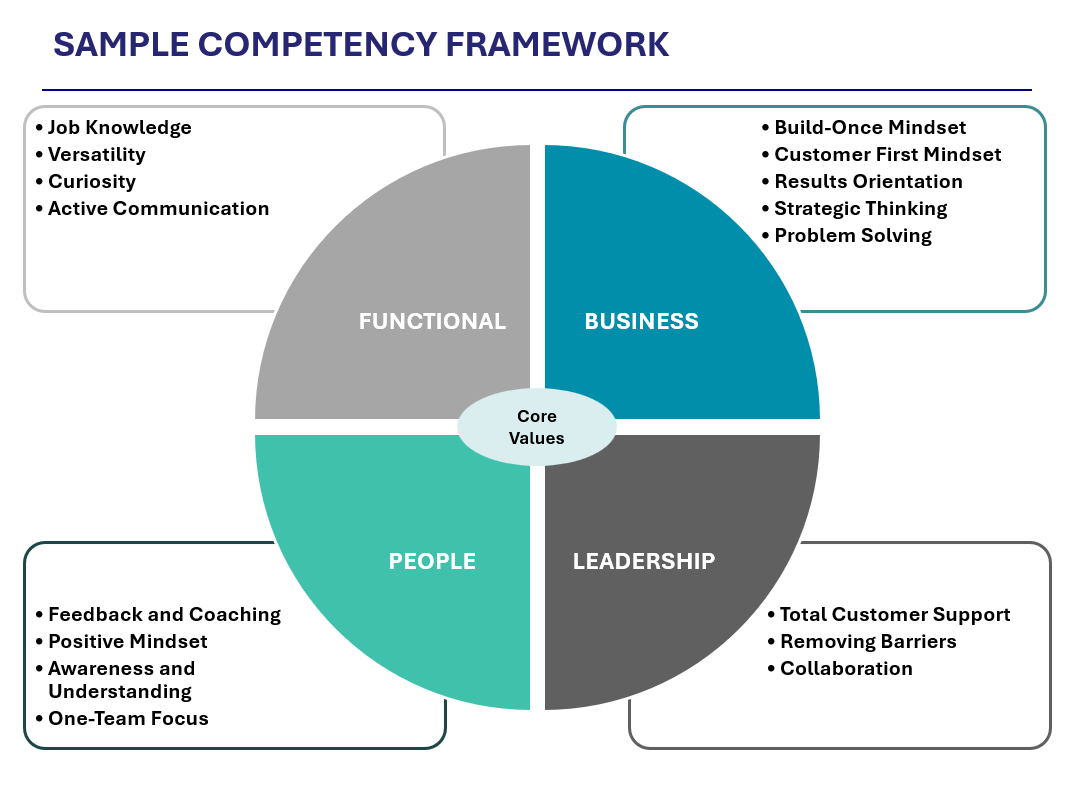
- A competency framework defines capabilities across the organization
- A competency model applies those capabilities to specific roles
Frameworks provide the broader system, while models provide role-specific clarity.
See competency framework examples across organizations.
When organizations blur the two, they end up with:
- Bloated frameworks that try to do everything
- Models that lack specificity
- Systems that are difficult to operationalize
- Solutions built on the wrong data and assumptions
Effective organizations build simple frameworks and precise models, not one giant, unusable taxonomy.
What actually works: a practical approach for competency models
Enough with the negative. Let’s shift from critique to construction.
If you want competency models that drive results (and not ‘was that in an email?’ six months later), there are a few non-negotiables.
1. Start with distinguishing strong performance from average
The best input for a competency model is not opinion. It’s data about performance.
What differentiates:
- Top quartile performers
- From average performers (middle 50 percent)
- Bottom quartile performers
Our approach at Corvirtus begins with identifying these differentiators through data and subject matter experts, as well as validated assessments. This ensures competency models reflect what actually works in the job. It also guards against the most expensive assumption in talent management, which is that the strongest performer in one role is automatically ready for the next one.
Learn why top performers still fail after promotion.
2. Keep it ruthlessly simple
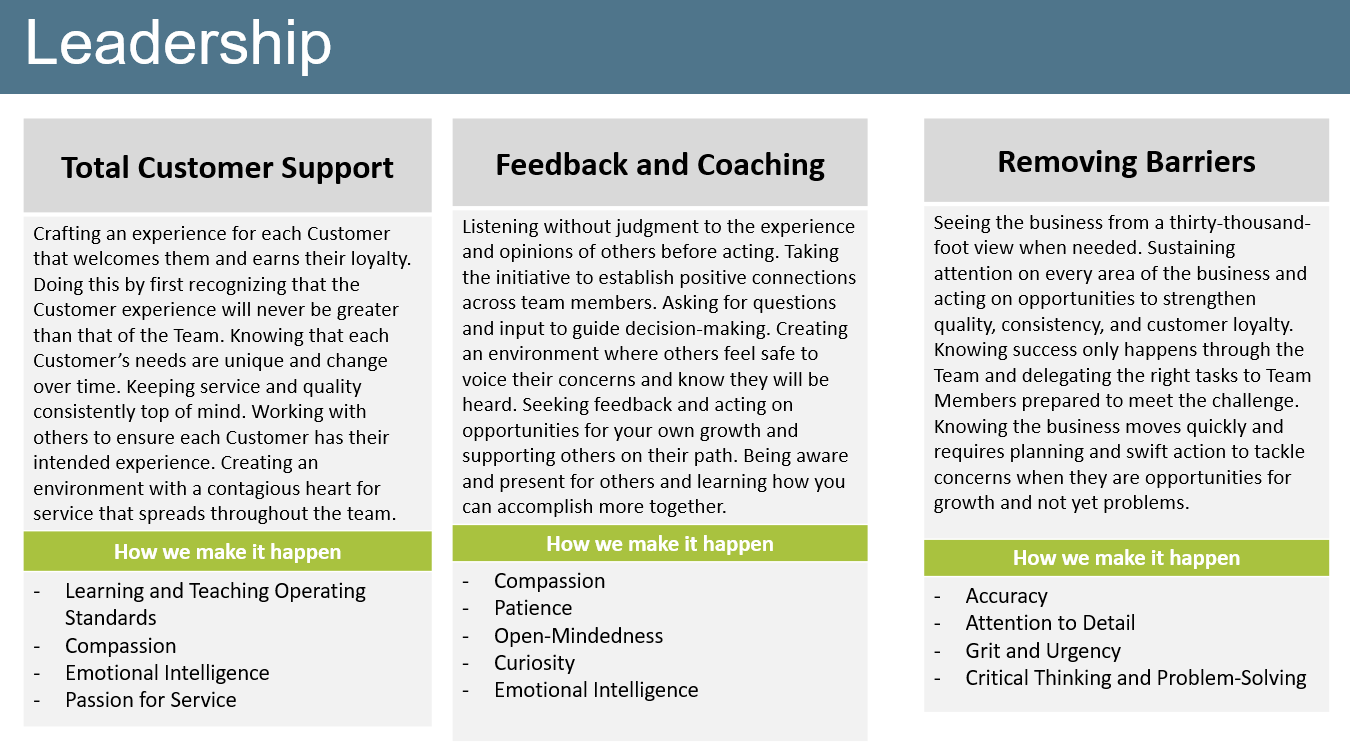
Strong competency models typically include:
- Meaningful categories that make learning and application easy, like functional, business, people, and leadership competencies
- Clear, distinct definitions
The extra time spent on development more than pays for itself with ease of adoption and the ability to drive results.
Because here’s the truth: a model that is rigorous but unusable loses to a simpler one every time.
3. Define behavioral indicators that are observable
Every competency should answer:
“What does this look like on a Tuesday at 2 p.m.?”
For example:
- Weak: “Drives results”
- Strong: “Sets clear daily performance goals and follows up on gaps in the same shift”
Behavioral indicators make competency models actionable, and make skills-based hiring and talent management defensible.
4. Anchor competencies to proficiency levels that matter
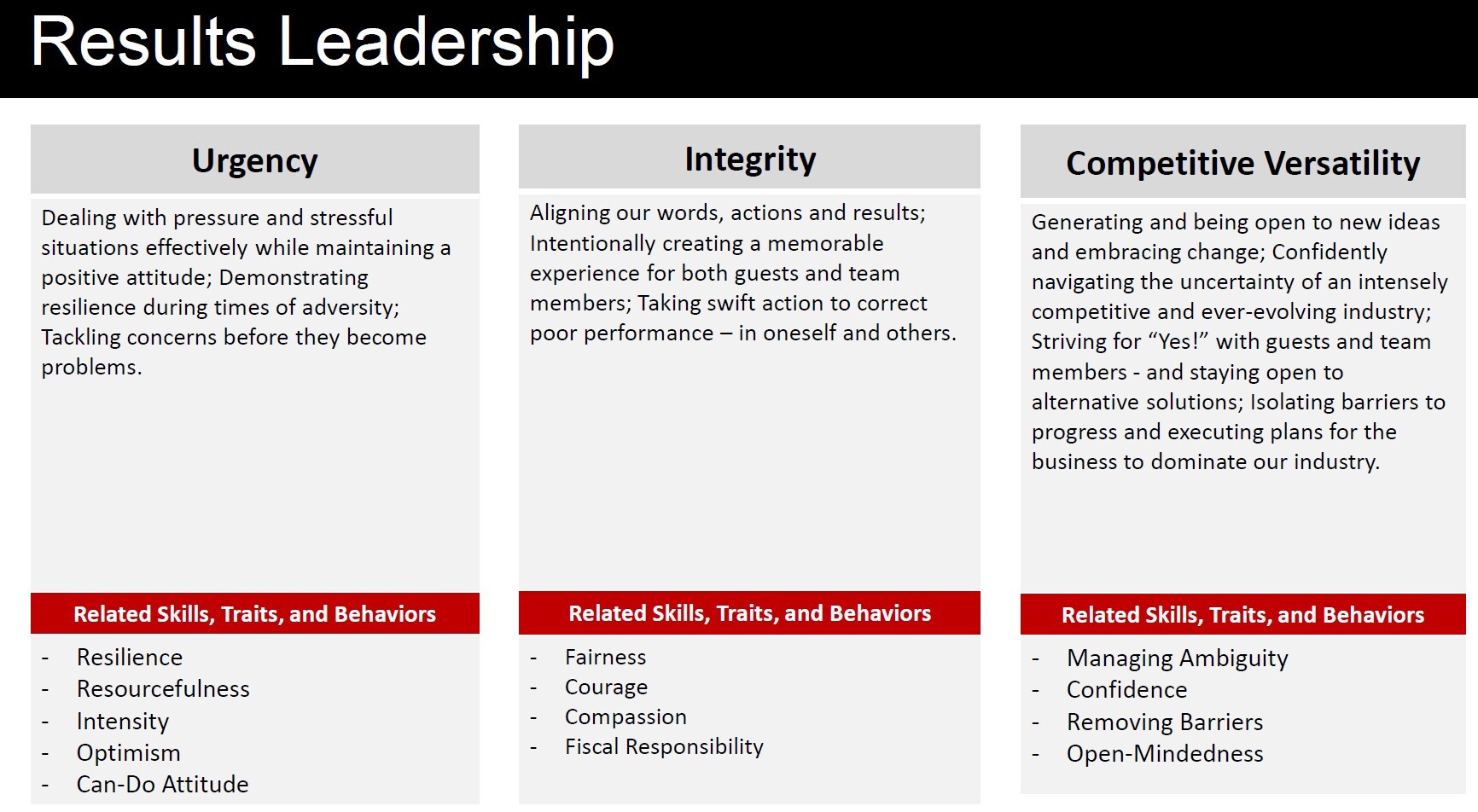
Most competency models include levels, but too few differentiate meaningfully.
Effective models:
- Define what “baseline” vs. “top performer” looks like
- Make comparison across employees consistent, accurate, and relatively simple
- Support promotion and succession decisions
This is where competency models stop being descriptive and start being diagnostic. Including a full view of performance, from what's below the mark to what's exceptional, sharpens that diagnosis. This also makes it easier to connect competency models and frameworks to performance management systems, like 360-degree feedback.
5. Bring competencies to life with assessment and selection systems
This is where we at Corvirtus differentiate our approach most clearly.
Competency models should not live in isolation.
They should feed directly into:
- Pre-hire assessments
- Structured interview processes
- Performance evaluation systems
This creates alignment across the talent lifecycle, ensuring the same definitions of success drive hiring, development, and promotion.
Where competency models truly drive business impact
When designed and used correctly, competency models show up in real business metrics, not just HR dashboards.
Hiring accuracy
Competency-based selection improves quality-of-hire and reduces early turnover.
Employee performance
Clear expectations lead to more consistent performance management and coaching.
Development efficiency
Training investments align with actual skill gaps, not generic programs.
Leadership pipeline strength
Organizations can identify and develop leaders earlier and more accurately. This is the foundation of succession planning that sustains excellence when a seat opens unexpectedly.
Competency frameworks also play a key role in identifying skill gaps and guiding development decisions.
The next evolution: competency models in a skills-first world
Competency models are becoming:
- Skills-based architectures guiding how teams evolve to meet strategic needs and change
- Integrated with assessment technology
- Continuously updated with performance data
This means rather than static documents, they become living systems that:
- Power internal mobility
- Enable skills-based hiring
- Support workforce planning
At Corvirtus, this evolution shows up in how we support our clients in creating evidence-based selection and development systems, rooted in data rather than static frameworks of what ‘should’ be right now.
What this means for HR and talent leaders
For leaders evaluating or rebuilding competency models, the question isn’t:
“Do we have a competency model?”
It’s:
“Does our competency model actually consistently inform and improve decisions?”
Because if it doesn’t influence:
- Who gets hired
- Who gets promoted
- How talent gets developed
…it’s not driving value.
The bottom line
Competency models aren’t broken.
But most implementations are lacking, or missing entirely.
The organizations seeing real impact are those that:
- Build models from performance data
- Keep them simple and behavior-based
- Integrate them into hiring and development systems
- Treat them as tools, not documentation
And increasingly, they partner with firms like us at Corvirtus that specialize in aligning competency models with validated hiring assessments and intentionally set performance outcomes, ensuring their talent strategy is both practical and predictive.
Final thought
Most competency models do not fail because the concept is flawed. They fail because the model never becomes part of how the organization hires, coaches, evaluates, and promotes people.
The real opportunity is not another shinier framework collecting dust. It is building a system where competencies actually show up where it counts: in the decisions that shape performance, development, and long-term workforce strength.
Frequently Asked Questions
Why don’t our managers use the competency model we built?
Usually because the model was written to be complete rather than usable. If a manager can’t apply it in the five minutes before an interview, it stays on the shelf. We build competency models around observable behaviors, drawn from what separates your strongest performers from the rest. Then we wire them into the interview guides, assessments, and review forms managers already use. The model shows up in the work instead of beside it.
What is a competency model, and how is it different from a competency framework?
A competency framework is the organization-wide set of capabilities. A competency model applies those capabilities to one role, level, or job family. The framework creates consistency. The model creates role-level clarity. We keep the framework simple and the models precise, because the reverse produces a taxonomy nobody can use. When a client tells us the model feels too complicated, the framework has usually absorbed work the model should be doing.
How does Corvirtus build a competency model from performance data?
We start with your results, not a template. Our team learns your operations and culture, then identifies what separates top-quartile performers from the middle and the bottom. That comes from performance data, your subject matter experts, and validated assessment results together. We translate those differences into Performance Dimensions with behaviors a manager can observe on any shift. The model reflects what works in your jobs, not what sounded right in a workshop.
How many competencies should a competency model include?
Fewer than most organizations expect. In our experience, a model carrying 30 capabilities rarely changes a single hiring decision. A focused set, grouped into categories a manager can hold in her head, earns adoption that an exhaustive one never will. The right number depends on the role and on the decision the model has to support. Our test is simple. Can a new leader read it once and apply it correctly?
How do competency models connect to hiring assessments and structured interviews?
This is where a model stops being documentation. The same competencies that define success in the role become the criteria we measure before the hire. We build structured interview guides and validated hiring assessments against them. Results come back in the language of the model, so managers recognize what they are reading. One definition of good performance ends up driving selection, coaching, and promotion instead of three competing ones.
How do competency models support employee development and succession planning?
A model makes readiness concrete. Rather than ranking people by tenure or gut feel, a leader can compare current behavior against what the next level actually requires. We keep that comparison behavioral: composure under pressure, feedback that improves someone else’s work, delivering results through others rather than around them. Talent reviews get more consistent, and development targets the behaviors that move someone toward the role ahead.
Hero Image by Luca Upper on Unsplash
Build the competencies you need today and for a thriving future.
See how we turn competency models into validated hiring assessments and employee development your managers actually use. Subscribe for more insights on talent management, assessment, and beyond.