
Leadership Development and Coaching: Breaking the Turnover Cycle
Burned-out managers are why good people leave. Coaching is how restaurants and hospitals keep both.
One of your top performers just left. Again.
The resignation letter sits on your desk—the third one this month from a manager you thought was growing and thriving. You’re not alone in this crisis. In a 2022 survey of nearly 15,000 employees across 15 countries, one in four reported burnout symptoms, and those employees were six times more likely to say they intend to leave their employer within three to six months. That’s the cycle. A departure adds work to the people who remain. The extra work wears them down, and the wear-down starts the next departure. But here’s what successful mid-market companies are discovering: a solution that is not easy, but is simple to understand. Leadership development and coaching isn’t just a culture thing or a benefit. It’s needed for any strategy, not just to innovate and compete, but to break the burnout-to-turnover cycle.
When Burnout Becomes Contagious: The Business Case for Coaching
The mental health crisis has evolved beyond individual suffering into something systemic. Burnout is a frequent struggle for about one in four employees. We often support restaurant and hospitality leaders. In these industries, high turnover is unfortunately viewed as an unavoidable cost of doing business. When we add the ups and downs of the past ten years, changes in technology, and a more competitive employment landscape, the costs of ignoring employee turnover are high. Retail and restaurant managers are especially vulnerable to burnout as they cope with record departures and understaffing. Here’s a brief walk-through of the numbers:
- Total costs associated with losing an employee range from 30 to 200 percent of an employee’s salary.
- The average annual turnover cost is $36,295 in lost productivity and recruitment expenses per employee.
- If we look at reasons for turnover, burnout and mental health clock in near the top, with 40 percent of departing employees saying it was a primary reason for their decision. Depending on the source, this more than doubles the percent of turnover caused by pay and benefits.
- We know turnover doesn’t just affect individual contributors. When managers struggle, the effects spill over across your team and your bottom line. Direct reports and team members are much more likely to leave when they lose a leader. Customer satisfaction and sales drop, and immeasurable institutional knowledge walks out the door.
The good news? There’s actually a straightforward way to make progress: it’s something everyone can get behind, even if it isn’t always a walk in the park. Putting energy and resources into leadership development and coaching is one of the quickest ways to get ahead of turnover. We’re doubling down on our leaders—the folks at the heart of each team. When your managers have the tools and support they need, that positive impact ripples out, boosting not just team morale, but also retention and performance across the board. Sure, it takes some commitment, but the payoff goes well beyond just keeping people around; it sets your whole team up to thrive even when the pressure’s on.
Evidence from the Front Lines: How Corvirtus Transforms Crisis into Competitive Advantage
Sometimes the best evidence comes from real kitchens and dining rooms. Take the story of how we partnered with Taste Buds Management. Turnover decreased from over 100% to 90% within only a few months. Over the following years, turnover continued declining, falling below 40%.

What made the difference wasn’t just reduced departures. Chris Rodrigue, a hospitality consultant hired by Taste Buds, noted that “the quality of employees, especially leaders, increased. This elevated training and development of new hires. Employees focused more on growth and viewed the job as more than ‘just another paycheck.’” This transformation happened through systematic assessment and development of leadership coaching capabilities.
When Chris moved to a new fast-growing hospitality concept, he brought this evidence-based approach with him. The results? Within six months of implementing Corvirtus assessments focused on developing and supporting new hires, the group saw a 25% reduction in turnover. Full-time staff numbers notably increased, and positive online guest reviews climbed—which leadership directly attributes to improved retention and more stable teams.
The financial logic was simple: reducing turnover by just seven people would pay for the entire program.
The Science of Coaching: Why Some Leaders Retain While Others Repel
Not all leadership training works. Generic workshops and motivational speeches rarely create lasting change. What does work is evidence-based coaching development grounded in industrial and organizational psychology.
Let’s switch gears to another service-driven sector: healthcare. CDC research on healthcare workers reveals the specific factors that reduce burnout. Health workers experience a decrease in odds of burnout if they:
- Trust management.
- Experience consistent support and coaching from their supervisor.
- Are equipped with the time and resources needed to complete their job responsibilities well.
- Believe their workplace supported their own personal productivity and career.
On the flipside, it’s not surprising that experiencing counterproductive behaviors like harassment and rudeness (often called incivility) increased the odds of anxiety, depression, and burnout three to five times.

Restaurants and hospitals look nothing alike from the outside. Frontline work in both has the same structure: shift-based, short-staffed, emotionally demanding, and shaped day to day by a supervisor. In our own healthcare retention work, using both stay and exit interviews, the immediate supervisor was consistently the greatest driver of whether people stayed or left. Whether the setting is a kitchen or a nursing unit, the lever is the same: the leader.
In short, there’s a clear path before us to reduce turnover and the other damaging consequences of stress and burnout at work. Each of these behaviors starts with leadership and can be strengthened by targeting development and coaching at leaders. It’s not about soft skills but teaching key leadership competencies that directly influence team retention.
But for leadership coaching and development to work, we need to understand the person: the strengths and vulnerabilities of the collective and each person. Then we can build tailored and targeted development and coaching programs that drive trust and engagement.
This is where an intentional approach to assessment can make the difference. Leadership assessments, whether during the hiring and promotion process, or for development, isolate strengths, ways of working, and areas of opportunity.
Breaking the Burnout Cycle: Practical Strategies That Actually Work
Leadership development and coaching succeeds when it tackles real-world workplace headaches and not just textbook theories. Here’s how organizations are trading flavors of the month for bold results, using evidence-based strategies that actually move the needle.
The Connection Crisis
Traditional performance management and reviews usually fall short of driving results. The alternative involves regular coaching conversations—brief weekly touchpoints that assess both performance and well-being. With these more frequent connections, we can coach the leadership behaviors that drive burnout, both for the leader and within the team.
If we step back to the restaurant industry for a moment, weekly discussions about burnout, engagement, morale, and well-being might be just as critical as P&L reviews. When we support restaurant leaders with performance feedback, we often put into place the following simple disciplines to make behavior change stick:
- Make discussion of performance goals and progress, related to coaching and development, part of regular meetings. Weekly leadership team meeting? Make goals an agenda item and don’t skip it.
- Nudges are powerful. Checking in about progress at a meeting and making that a set agenda item is one type of nudge. A nudge is anything simple that keeps our goals front of mind, or makes the choice that supports our goals easier. What if you received a simple automated email that reminds you of your goals each month? We’ve scheduled regular emails reminding leaders of a key strength and giving them resources and a nudge to take one small action to maximize their strength.
Strength-Based Coaching Protects Against Burnout
Coaching that supports and celebrates our strengths and uses them to target our vulnerabilities addresses the whole person and also protects against burnout. It’s easy to fall into an approach that focuses precisely on the greatest gaps in performance. However, a weakness-only approach creates a fixed mindset, limiting both personal growth and team progress. By concentrating solely on deficiencies, development efforts reinforce self-doubt. We’re more likely to doubt ourselves, and trust is likely to decline. This often results in disengagement and burnout, especially in high-stakes, fast-paced industries like customer service and healthcare.
Sustainable (i.e., an intentional program that endures) leadership development means not just identifying and addressing performance gaps, but also growing strengths to build confidence, drive engagement, and inspire continuous improvement. Creating this balanced focus empowers leaders to coach more effectively, ultimately shifting the culture from correction to ongoing growth and innovation.
When we work with organizations for employee promotion, selection, or development and coaching, managers make use of tools like surveys, performance feedback, and assessments to support each person’s unique constellation of strengths and vulnerabilities. If we know why a manager excels at customer or guest recovery, perhaps some of those strengths can apply to support them in managing team conflict. A kitchen manager with strong organizational skills may simply need direction to use them as a resource when they unexpectedly end up in the weeds.
By focusing on strengths, managers and employees shift from a dynamic of criticism to one of true collaboration. They create an environment where trust and a growth mindset flourish.
Crisis Coaching Protocols
When we talk about teaching and coaching, it’s easy to overlook that burnout and stress don’t happen on schedule or in predictable cycles. They strike without warning—a punishing double shift, a family crisis, an emotionally charged customer exchange. In those moments, the impact on performance, motivation, and well-being is immediate and profound.
The first burnout resignation is rarely the last. It is the first domino. When someone leaves, two things decide whether the gap stays contained. One is how the extra work is spread. The other is whether anyone knows when it ends. A schedule won’t show who is already at their limit, so ask them. Then find your team below.
| Dated gap | Open-ended gap | |
|---|---|---|
| Spread across the team | Contained. Everyone stretches a little and knows it ends. | Slow drain. No one is in crisis, but the extra effort has no stopping point. |
| Concentrated on a few people already at their limit | Risky but survivable. Relief is in sight for the people carrying the most. | The first domino. Your most reliable people carry the most, with no end in sight, and start asking why. |
If your team lands in the top-left box, coaching is not where your next dollar should go.
Wherever your team lands, ask one more question. Has anyone said out loud that this is hard, and thanked the people covering? It costs nothing.
Our approach to employee retention guides leaders to create supportive environments where employees know they are valued by feeling respect, understanding, caring, and fairness, even during difficult moments.
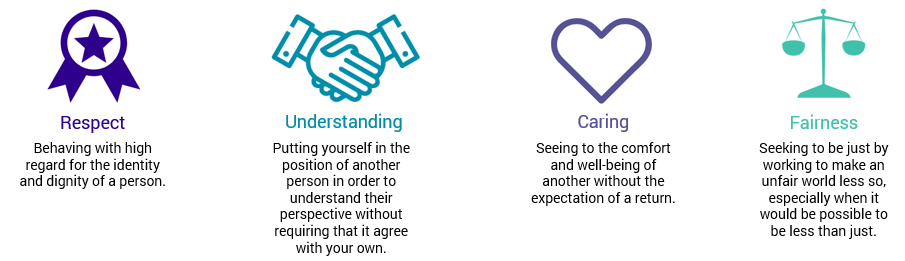
This includes training managers to spot early indicators of burnout. With greater awareness, changes like increased absenteeism, a drop in engagement, or visible shifts in behavior get noticed and acted on. This proactive approach grows from staying connected with the thoughts and feelings of the team.
For example, managers are coached to have direct conversations with employees who seem to be taking on higher workloads or extra shifts, or to ask questions about mistakes following a difficult customer exchange. They also learn to guide teams toward realistic solutions such as scheduling adjustments, opportunities for upskilling, job rotation, and addressing constraints in the work environment. Building daily disciplines that both support the bottom line and the team empowers managers to respond promptly, ensuring employees feel supported in the moment and know where to turn when challenges arise.
The ROI of Leadership Development and Coaching: Why Invest Now
For customer-facing organizations operating on thin margins, investing in leadership coaching might seem like a luxury. Let’s examine the financial reality with actual data.
The Multiplication Effect of Training and Development
When you develop one manager’s leadership capabilities, the impact multiplies across their entire team. We know the average manager oversees about eight to 15 employees, creating a positive spiral of earned trust, psychological safety, improved retention, productivity, and KPIs accomplished throughout the organization.
According to Ernst & Young’s Empathy in Business Survey, 86% of U.S. employees said empathetic leadership boosts morale. Morale isn’t just a feeling—it’s a leading indicator of retention, productivity, and customer satisfaction. We talk a lot about the trust gap hurting both financial results and employee well-being and engagement. While leadership training, coaching, and employee development are often among the first to go during economically tough or uncertain times, there’s a case to be made for making them the last.
Industry-Specific Returns
Different industries see different returns from coaching development:
- Restaurants: Beyond the case we shared earlier, our research on operational excellence and the attention to detail and quality it requires shows that teams guided by leaders selected, and then developed, with evidence-based training and coaching reduce food waste by more than 10%, with their teams rated as being eight times more likely to consistently deliver.
- Healthcare: Becker’s Hospital Review measured the direct cost of nurse turnover at approximately $52,000 per nurse. At the same time, our work around healthcare retention (using both stay interviews and exit interviews) consistently found the immediate supervisor to be the greatest driver (or cause) of retention and commitment, or intentions to leave and turnover. With healthcare turnover clocking in around 20 percent, there’s a case for making leadership development and coaching a priority.
- Business Services: The impact of coaching and development is pronounced even for knowledge workers who might look at the screen in front of them more than at a human being. For knowledge workers, preparing leaders to actively coach and develop is just as important. This employment group is eager to learn and fearful of missing out on opportunities for knowledge and skill building. A leader not fully engaged in connecting and coaching can be just as harmful. Professionals in business functions like technology, accounting, finance, and human resources, and knowledge workers overall, are vulnerable to information overload. Their work often carries a strong feeling of uncertainty. All of these challenges are coachable, especially with self-aware and engaged leaders. Leadership becomes even more critical.
Getting Started: A GrowthMap for Leadership Development
The map away from burnout and turnover to retention and greater employee well-being is clear, but still tough to traverse.
- Begin with competencies. Before launching an effective leadership development and coaching program, define the core leadership competencies (grounded in your culture and operations, of course). Establishing clear leadership competencies creates a shared blueprint for what strong leadership looks like. It anchors expectations, guides day-to-day behavior, and provides clarity for coaching and development. By mapping out the competencies that drive results and reflect your unique culture, you pave the way for precise coaching and training initiatives. This foundational step ensures your program is not one-size-fits-all, but instead fosters measurable growth and sustainable change by focusing on the specific skills and behaviors that matter most for your leaders and teams.
- Start by benchmarking your leaders with assessments connected to those competencies. Validated leadership assessments, like ours at Corvirtus, compare results to industry and organizational standards. This highlights which managers excel at developing their teams and where targeted growth is needed.
- Integrate performance feedback alongside assessment data to provide a complete view of each leader’s strengths and development areas. Marrying assessments that create greater awareness of your values and ways of working with performance feedback is powerful. It helps us see the why behind the hiccups and missteps in our day-to-day actions. This evidence-based approach ensures you’re not guessing. It often uncovers opportunities for focused coaching, even among top performers who may benefit (and value) the most from additional development and coaching.
- Establish specific, measurable goals and track leading indicators of success: stress-related absences, employee engagement scores, observable monthly metrics, and early turnover warnings. When you see improvement, expand the program systematically. Success gains momentum.
Why Science Beats Gut Instinct for Development and Growth
What sets us at Corvirtus apart extends beyond our expertise in industrial-organizational psychology and the evidence-based approach that comes from it. We recognize that lasting, meaningful change is achieved through a systematic process: employing assessment, implementing targeted development, and providing consistent support throughout the journey.
Unlike large consulting firms that simply deliver findings and exit, our team remains an active presence. In contrast to technology-only providers who supply solutions that struggle to connect to your systems, we value working alongside you.
Central to our philosophy is the understanding that leadership development and coaching are not about cultivating a perfect end state. Rather, they are about equipping real leaders, imperfect people, with practical tools and strategies to enable others to thrive amid the realities of demanding work. Supporting people in this way not only drives business results, but also creates a culture rooted in empathy, trust, and human connection.
Your Next Move: From Crisis to Competitive Advantage
Every day we avoid understanding burnout and mental well-being within our leaders and employees, the odds it affects the bottom line get even worse. But the process can begin with a single conversation, a single assessment, a single manager who learns to truly support their team.
The ROI is proven. The question is whether you’ll implement it before your next key leader or high-potential employee walks out the door. Because when your managers become coaches, what was your crisis becomes your competitive advantage.
Photo by Fons Heijnsbroek on Unsplash
Frequently Asked Questions
Why is turnover so high among restaurant managers?
Restaurant managers face record departures, understaffing, long shifts, and guest-facing stress, often with little coaching of their own. When a manager burns out, the effects reach the whole team: direct reports are much more likely to leave when they lose a leader, and guest satisfaction and sales drop. When a manager or a few key people leave, the rest cover the gap. That extra load is how burnout spreads through a team. In a 2022 multi-country survey, employees with burnout symptoms were six times more likely to say they intend to leave. The most reliable way we have seen to break the cycle is to develop and coach the managers themselves. At Taste Buds Management, turnover fell from over 100% to below 40% over the following years.
Why do healthcare organizations struggle with frontline staff turnover?
Frontline healthcare work has the same structure that drives restaurant turnover: shift-based, short-staffed, emotionally demanding work. CDC research found lower odds of burnout when workers trust management, get consistent support and coaching from their supervisor, have the time and resources to do their jobs well, and believe their workplace supports their productivity and career. Incivility, such as harassment and rudeness, raised the odds of anxiety, depression, and burnout three to five times. In our own stay and exit interview work, the immediate supervisor was consistently the greatest driver of whether people stayed or left, which makes supervisor coaching one of the most direct places to act.
What is leadership development and coaching, and how is it different from training?
Leadership development builds the competencies a leader needs, such as trust, support, and fairness. Coaching puts them to work through regular, individual conversations about performance and well-being. Training usually delivers knowledge in a workshop or a course. Development and coaching start with what each leader already does well and where to grow, using assessments and performance feedback, and then follow up over time. Generic workshops and motivational speeches rarely create lasting change.
How does strength-based coaching protect against burnout?
Coaching that targets only performance gaps can reinforce self-doubt, which lowers trust and can lead to disengagement and burnout, especially in fast-paced, high-stakes work. Strength-based coaching starts with what a leader does well and uses it to address their vulnerabilities. A manager who excels at guest recovery, for example, can apply that skill to team conflict. It moves the relationship from criticism to collaboration, which supports trust and a growth mindset.
What are the early warning signs a manager is burning out?
Look for increased absenteeism, a drop in engagement, and visible shifts in behavior. A manager who is taking on extra shifts or a heavier workload, or who is struggling after a difficult guest or customer exchange, deserves a direct and supportive conversation. Weekly check-ins that cover both performance and well-being make these changes easier to catch early, and coaching managers to watch for them helps the whole team.
Do leadership development and coaching reduce turnover?
In our client work, yes. At Taste Buds Management, turnover fell from over 100% to 90% within a few months, and below 40% over the following years. At a fast-growing hospitality group, turnover dropped 25% within six months of assessments focused on developing and supporting new hires, and reducing turnover by just seven people would have paid for the entire program. These are two client examples, not a guarantee, but they point the same way as the research: the leader is the lever.