
When Support Breaks Down Under Pressure
You may have seen so-called 'alpine divorces' getting a lot of attention lately. It is a grim phrase (starting with a dark short story from the 1890s we won't get into), but a useful one. Literally, it describes one hiker abandoning their partner during a hike or ascent and leaving them to find their way back alone. The danger is real, the impact is immediate, and the experience is uncomfortably familiar.

I know work abandonment usually doesn't happen in the outdoors. But once you see the pattern, it is hard to unsee how ‘alpine Divorces’ play out within organizations daily. These are the moments when everything is riding on trust, coordination, and shared risk—and that suddenly vanishes. And in roles where safety is part of the job, walking away when dependence is highest carries consequences that are every bit as serious.
At a Glance
- Workplace 'alpine divorce moments happen when leaders or peers withdraw support at the exact moment risk and exposure peak.
- These moments are predictable outcomes of specific leadership and workforce skills gaps: sustaining influence under resistance, risk containment, conflict tolerance, and accountability integrity.
- They also show where our culture falls short: organizations reward outcomes and confidence, but underweight virtue-based behaviors—courage, fairness, responsibility, and care—especially when incentives pull the other direction.
- Skills-based organizations prevent this by building pressure-tested leadership. They select and develop observable, assessable, developable capabilities and by promote only those who consistently demonstrate the cultural values required to stay clipped in.
What we'll talk about :
- High-Altitude Trail Moments at Work
- What a Workplace Alpine Divorce Looks Like
- The Four Capabilities for Staying Clipped In
- The Culture Risk: Promoting Competence Without Virtue
- The Hiring and Promotion Gap
- The Downstream Cost
- What to Do Instead
Skill-Based Gaps Driving High-Altitude Trail Moments
Let’s look at some large and smaller examples of an alpine divorces in organizations.
- A dinner rush is peaking. A server is getting hit from every direction—tables waiting, orders backing up, guests getting impatient. One guest, now visibly frustrated, asks to speak to the manager. The server looks toward the general manager for help. But instead of stepping in, the GM slips into the back to “take a call,” leaving the server alone to absorb the frustration in a moment they should not have to manage by themselves.
- A retail reset runs late, and the district leader who approved the plan leaves the store manager to explain the missed targets alone.
- A hospital introduces a new workflow on a busy unit to improve patient flow. During the first truly pressured shift, the change creates confusion. Orders are delayed, handoffs are unclear, and nurses are worried about missing something important for their patients. When the team raises concerns, the charge nurse leading the floor withdraws from the team instead of clarifying expectations, leading and coaching in real time, and filling the gap the team needs to execute.
- An angry delivery person discards packages rather than completing the route, breaking the basic promise of safety and stewardship. Essential items never arrive—medication, utility bills, photos from family vacations—leaving customers exposed at the very moment they are counting on someone to follow through.
- A manufacturing crew flags recurring equipment malfunctions and asks leadership for maintenance resources. The requests are acknowledged but never funded. Supervisors stop escalating because the message is clear: production targets come first. When the system finally fails, the people closest to the risk absorb the consequences—not the leaders who deprioritized safety. This isn’t hypothetical. In 2005, the BP Texas City refinery explosion killed fifteen workers and injured 180. The Chemical Safety Board’s investigation found a “broken safety culture”—workers and supervisors had raised safety concerns for years, but leadership withdrew from accountability in favor of cost targets. It was an Alpine Divorce at industrial scale.
That is the workplace equivalent of unclipping the rope.
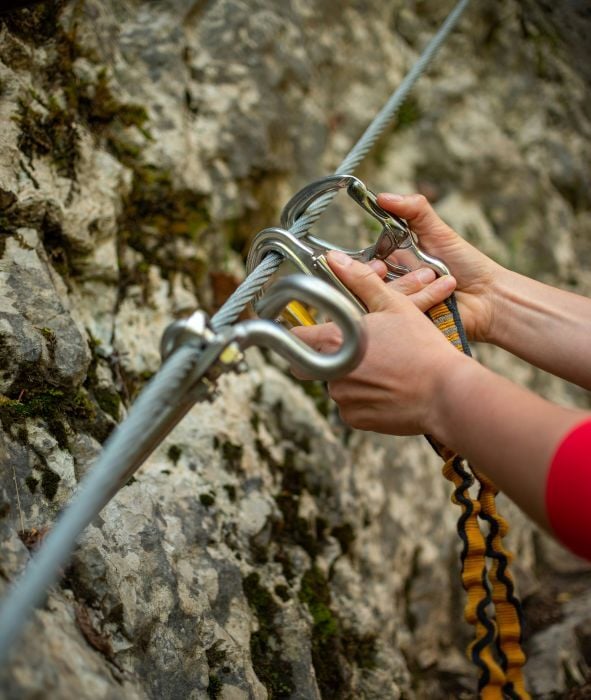
What makes these moments so damaging isn’t just the loss of help. It’s the abandonment of a promise for employees: we take risks and do tough things, but we stay together. When that doesn’t happen, we aren’t just disappointed. We learn that ownership is unsafe. We stop raising our hands. We build “protect myself first” reflexes that look like disengagement, risk aversion, and “not my job.” Harvard’s Amy Edmondson calls this the collapse of psychological safety—the belief that the workplace is safe for speaking up with ideas, questions, concerns, and even mistakes. When psychological safety disappears, so does the candor organizations need to catch problems before they become crises.
Here’s the hard truth: workplace ‘Alpine Divorce’ moments are rarely the product of a dark villain from an 1890’s short story. They’re far more often the product of capability gaps paired with culture gaps. We either haven’t defined the frontline leadership skills people need in pressure moments, or we didn’t practice skills-based hiring for the values that keep teams “clipped in” when support becomes tough.
And this is exactly where a skills-based organization connects with culture. Skills-based organizations are not just about building attractive career ladders and the skills we need in five years. When done well, they’re about building the capabilities that prevent predictable leadership failures—especially in moments when people are most exposed.
Our reason for being is building systems and solutions so leaders, teams and the cultures that bond them together, hold up under pressure. Our name, Corvirtus, literally means heart and virtue. In just the past year we’ve had several engagements with organizations driven to mitigate risk with a skills-based strategy grounded in culture and the capabilities that drive performance.
What a Workplace Alpine Divorce Looks Like (and Why It’s Predictable)
Most of us can name a version of this without thinking long:
- A leader champions a change initiative until resistance appears, then goes quiet in the meetings where support matters.
- A sponsor pushes someone to “take the shot” with a bold decision—then distances themselves the moment outcomes become uncertain.
- A leader promises resourcing or coverage for a critical milestone—then “gets pulled into something” during the crunch.
- A high performer becomes the face of a risky effort—then is left alone to absorb backlash.
These moments feel personal because they are. Trust is lost between people. But the pattern is structural: it shows up when organizations don’t clearly define (and reward) what leaders, and their teams, must do when stakes rise.
In steady-state conditions, many leaders look competent. In pressure-state conditions, competence becomes something else. The environment demands specific skills: the ability to advocate in conflict, share risk, make tradeoffs visible, and protect the team while staying honest about outcomes. If those capabilities aren’t defined, assessed, and developed, we don’t get them by accident.
This is why we say: If a leadership failure is predictable, it’s designable. And skills-based organizations are built to design for it.
Spot the Alpine Divorce Moment
You may be in one when:How resilient is your organization under pressure? Take our Resilience Self-Assessment to find out where your team stands—and where the rope might be fraying.
- A leader endorses a risk, then disappears when it gets challenged
- Accountability flows downward; protection does not
- Silence replaces advocacy at the exact moment it's most needed
- Priorities shift without explanation—and the fallout lands on the least powerful person
- “You’ve got this” becomes a euphemism for “You’re on your own”
Capabilities for “Staying Clipped In” (Skills-Based Organization Lens)
When we strip away the drama, Alpine Divorce moments map to a tight cluster of capabilities. We can assess them. We can develop them. We can hire for them.
While leaders are often central in these moments, influential individual contributors can just as easily step away when they are most needed. As we explore skills-based organizations, we will return to a critical gap: how to exercise meaningful influence and stay “clipped in” even when you do not hold formal authority.
With this in mind, let’s walk through the capabilities most organizations assume—and then regret assuming.
Capability #1: Sustained Influence Under Resistance
What it is: The ability to maintain advocacy, support, and a shared vision when challenged by peers, politics, or competing priorities.
Most of us can sponsor an idea when the room is friendly. The true test is whether we can sustain influence when it makes us uncomfortable—when we might lose political capital, when someone louder pushes back, or when the initiative becomes messy.
What it looks like when it’s present:
- We show up publicly for the work we sponsored (not just privately).
- We name tradeoffs head-on instead of hoping others ‘won’t go there’ or will stay quiet in ambiguity.
- We influence stakeholders when it’s uncomfortable, not just when it’s easy.
- We reinforce the decision logic: “If we want this outcome, we accept these costs.”
What it looks like when it’s missing:
- Silence in key conversations
- “Let’s see how it plays out” as a substitute for advocacy
- Private encouragement paired with uncertain commitment in public
- Delegating hard conversations downward while staying insulated
Quick Scenario: The Change Champion Who Went Quiet
A regional leader green-lit a rollout that would change schedules and staffing ratios. She told the site leads, “We’re doing this. I’ll back you.” Predictably, frontline resistance hit fast—complaints, email chains, escalation to HR. The leader’s next move wasn’t to clarify the rationale, absorb heat, or reinforce boundaries. She went silent. Suddenly, site leads were defending a decision they didn’t have authority to revise, with no visible backing from the person who approved it. They didn’t quit immediately. They just stopped volunteering for the next “important initiative.”
Skills-based takeaway: Influence isn’t charisma. It’s durable (i.e., consistent) behavior under pressure. If we don’t define and assess it, we promote people who can sell ideas but can’t sustain them.

Capability #2: Risk Management (Not Risk Assignment)
Quick Scenario: The “You Own It” Trap
A director asked a high-potential manager to lead a new vendor partnership. The manager flagged risks: unclear success metrics, cross-functional dependencies, and a timeline that assumed immediate cooperation. The director said, “This is a growth opportunity. You’ve got this!”
Two months later, the vendor launch was delayed due to events outside the manager’s control. Instead of absorbing shared responsibility and resetting expectations with peers, the director asked the manager to “explain what happened” to senior leadership—alone. The manager could handle the facts. What broke trust was the unilateral exposure. From that point forward, “growth opportunity” translated to “career hazard.”
Sound familiar? This is where empowerment gets weaponized. “You own it” can be inspiring—until it becomes “You own the consequences too (alone).” In healthy leadership, accountability flows with support. In many ‘Alpine Divorces’ in the workplace, accountability floods downward while protection evaporates.
The capability is the ability to inspire and generate ownership while also understanding and sharing exposure so the team isn’t left holding the blast radius alone. Leaders who have it share accountability as a team (“This was our call as much as yours”), run interference when needed, ensure the team has resources and realistic expectations, and practice “no surprises” leadership upward and outward. Leaders who don’t? They set aggressive timelines without shared understanding, grant ambiguous authority (“You’re accountable, but not empowered to get it done”), shift into spectator mode when outcomes wobble, and distance themselves after the fact: “That was their decision.”
Skills-based takeaway: Recognizing, communicating, and mitigating risk is a leadership skill. If we do not measure it, we do not get leaders managing risk, but leaders auditioning to be its travel agent.
Capability #3: Conflict Tolerance and Toughness
Many leaders retreat not because they don’t care, but because they lack the skill to navigate conflict without escalating it, losing face, or burning social capital. The trouble is: to the employee left exposed, retreat looks like abandonment.
Consider two versions of the same moment. A powerful regional leader objects to a new workflow in a senior meeting: “This will slow us down.” In one scenario, the sponsor who approved the plan stays engaged—names the tradeoffs, holds the boundary, makes disagreement safe without letting it paralyze the room. In the other version, the sponsor stares at his notes and lets the people leader who recommended the plan take the full force of the pushback alone.
Quick Scenario: The Meeting That Changed Everything
Version two is what happened. After the meeting, the sponsor said privately, “You did fine.” The people leader didn’t need praise. She needed advocacy. That moment taught her exactly what “support” meant at that organization: encouragement in private, isolation in public.
The pattern reveals itself in small tells: avoidance disguised as neutrality, “we’ll circle back” deployed in critical moments when it’s already too late, the least powerful person left defending contested decisions while the person with authority vanishes the moment a louder peer pushes back.
Skills-based takeaway: Put simply, when we talk about “conflict tolerance and toughness,” this is what many people casually label as “executive presence.” If we do not name it that way and define it clearly, we will keep promoting people who look composed in calm conditions—but disappear the moment real friction arrives.
Capability #4: Relentless Integrity and Accountability (Clarity, Follow-Through, Repair)
This is where capability and culture connect. Some leaders act with integrity only when circumstances reward them for it. Values-based organizations select for leaders who act with integrity even when it’s inconvenient.
It's a discipline with three parts: creating clarity up front (authority, resources, success criteria, how we’ll handle setbacks), following through on commitments when pressure hits, and repairing trust when priorities shift. That repair piece is the one most organizations skip entirely—and it’s the one that costs them the most.
Quick Scenario: The Reprioritization That Didn’t Include the Humans
A department in a large retail organization shifted priorities mid-quarter due to a new strategy push. On paper, the change made sense. What didn’t make sense was how it landed: teams were told to stop work immediately and “pivot!” (with Ross Geller enthusiasm, no less) without explanation of what would happen to deliverables, commitments, or performance expectations. Teams were left holding questions they couldn’t answer, while senior leaders moved on.
The issue wasn’t the pivot. It was the absence of repair—no acknowledgement of sunk effort, no clarity on success criteria, no protection for the people who now looked “behind” on commitments that no longer mattered. When repair is missing, what fills the gap is sudden withdrawal without explanation, “not my lane” after previously approving the work, and reputation protection prioritized over team protection.
Skills-based takeaway: Accountability is not a fixed trait. It’s demands our attention and discipline—creating clarity, following through, and repairing trust—that organizations must define, expect, and reinforce.
Capabilities That Prevent Abandonment
When we define, assess, and develop these capabilities, Alpine Divorce moments become less likely and less damaging:
- Sustained healthy influence despite resistance (advocacy when it’s costly)
- Risk containment (shared accountability + ability to marshal resources)
- Conflict tolerance + boundary-setting (staying present in friction)
- Accountability integrity + repair (clarity, follow-through, and trust repair)
The Culture Risk: Promoting Skill-Based Competence Without Our Values
This is where we see the deepest organizational vulnerability.
A skills-based organization that focuses only on performance skills, without cultural values, risks becoming an efficient machine for scaling the wrong behavior. We can hire brilliant people and still create a workplace where abandonment is the rational choice.
Because culture answers a brutally practical question: What do we model and reward when it gets hard?
If the organization rewards speed over stewardship, image over candor, outcomes over process and integrity, confidence over responsibility—then Alpine Divorce behavior isn’t a failure. It’s an adaptation.
We’re up front about this: Our name, Corvirtus, literally means heart and virtue. It’s not a vibe. It shows up as observable behavior even when incentives pull the other direction. To take from our vision, these are a few of the commitments we share as teammates (our term for employee):
- Clear Direction: providing clarity on anything that matters, what happens next, and what success and execution look like
- Unwavering Support: staying visible, sharing the load, and not stepping away when the pressure rises
- Positive Mindset: choosing to start from positive intent, looking for what can be learned or improved, and addressing concerns without assuming the worst about people’s motives
When organizations don’t hire and promote for those values, they create a quiet equation:
“The safest career move is to distance yourself when things turn risky.”
People learn it quickly. And once they learn it, they teach it—through norms, silence, and who gets rewarded.
The Hiring and Promotion Gap: Selecting Leaders for the Wrong Signals
Most organizations still hire and promote leaders using signals that perform well in calm conditions: technical strength, individual execution, decisiveness, confidence and polish, “gravitas” or charisma in meetings.
But the skills that keep those “alpine divorce” moments from happening are often harder to see until the pressure is on: sticking with it, sharing and containing risk, navigating conflict constructively, taking accountable action and repairing trust, and making values-driven decisions even when they are difficult.
In other words: we keep promoting “flat ground excellence” into “high altitude leadership” roles. All we know about leadership derailment tells the same story—leaders don’t fail because they lack intelligence or ambition. They fail because the interpersonal and values-based capabilities that matter most under pressure were never part of the leadership competency framework used to select them.
This is why skills-based organizations aren’t a trend. It's mandatory to navigate unpredictable change and risk. When we define the right capabilities, we can select, develop, and promote leaders who won’t derail when change inevitably happens.
And when we pair that with cultural values—your heart and virtue—we build leadership systems that don’t just perform but protect and grow.
The Downstream Cost: Employees Learn the Wrong Skills
After a few 'alpine divorce' moments, most of our teams adapt. But it comes with a cost; even if everyone looks calm on the surface.

We focus on skills that will protect us: avoiding visibility, minimizing ownership, managing up by showing “the receipts” instead of building trust, withholding risk signals until they become emergencies, disengaging emotionally while performing on autopilot. They’re learned behaviors produced by a system, not attitude problems.
And when that happens, we don’t just lose engagement. Innovation struggles (no one wants to be the volunteer), resilience declines (people stop absorbing change), candor degrades (risk isn’t escalated early), and leadership bench strength falls (high potentials opt out quietly).
A culture that tolerates abandonment tells employees to stop climbing.
Is your team building resilience—or learning to protect themselves? Our Resilience Self-Assessment → can help you see the difference before your best people stop raising their hands.
What to Do Instead: Design “Stay Clipped In” Leadership (Skills + Values)
We can’t prevent every hard moment (and we don't want to). We grow from obstacles, but need to prevent barriers.
Here’s what skills-based, values-driven organizations do differently:
1) Define pressure-state leadership skills (not just steady-state capabilities)
If we only define leadership in calm conditions, we promote leaders who can lead only when it’s calm. Just as we stress-test software, workflows, steps of service, and any other resource, our approach to leadership requires the same focus. We recommend building a leadership competency model that defines the observable behaviors needed at the moments that matter: sponsorship under resistance, shared accountability, risk management, conflict navigation, and trust repair. Then, benchmark the skill-based competencies that are grounded in your culture. We can't treasure what we don't measure.
2) Hire and promote for capability + virtue
Capabilities predict performance. Values predict behavior when performance becomes personally costly.
Practical moves might include structured interviews using scenario prompts that force tradeoffs and propensity to embrace tough conversations, leadership readiness assessments that measure influence patterns, accountability orientation, and conflict navigation, and promotion criteria requiring evidence of executing pressure-state behaviors—not just results.
We help organizations prevent derailing leaders by building selection and development systems that identify who can stay clipped in—consistently, not occasionally.
Access a complimentary skill-based leadership assessment (and receive your complimentary report).
3) Openly reward the skill-based behaviors
Culture becomes real when recognition makes sense. If leaders only get rewarded for outcomes, they optimize for outcomes—even at the expense of people and culture. What if we intensely focused on rewarding the 'clipped in' behaviors that prevent isolation and abandonment? Actions and capabilities like owning decisions publicly, protecting teams without hiding reality, escalating risk early, and repairing trust after change.
4) Normalize repair as a leadership skill
Even strong leaders will misstep. The difference is whether repair is normal—or rare. A simple repair script:
- “Here’s what changed.”
- “Here’s what we own.”
- “Here’s what support looks like now.”
- “Here’s what we’re asking of you—and what you can ask of us.”
That’s heart and virtue in action: care with accountability. By taking a skills-first approach to hiring, building, and supporting leaders, we can acknowledge the importance of recovery and repair that we often overlook. Now we can coach and develop for it.
Reaching the Summit: Staying Connected to Our Skills-Based Approach
‘Alpine Divorce’ moments occur when the skills or values that keep people connected are weak or absent. Skills-based organizations recognize these behaviors as capabilities that can be developed. When this is combined with a values-based, culture-driven approach, those same behaviors become non‑negotiable expectations.
If your culture is truly built on heart and virtue, the standard is simple:
When the climb gets steep, we don’t unclip the rope.
Quick reflection—
Where in your organization have people learned that “owning it” means “being left alone”? And what would change if you hired and promoted leaders who stay clipped in—by capability and by character?
Ready to find out where your organization stands? Explore our resilience self-assessment and guide→ or talk to us about building leadership systems that hold up under pressure.